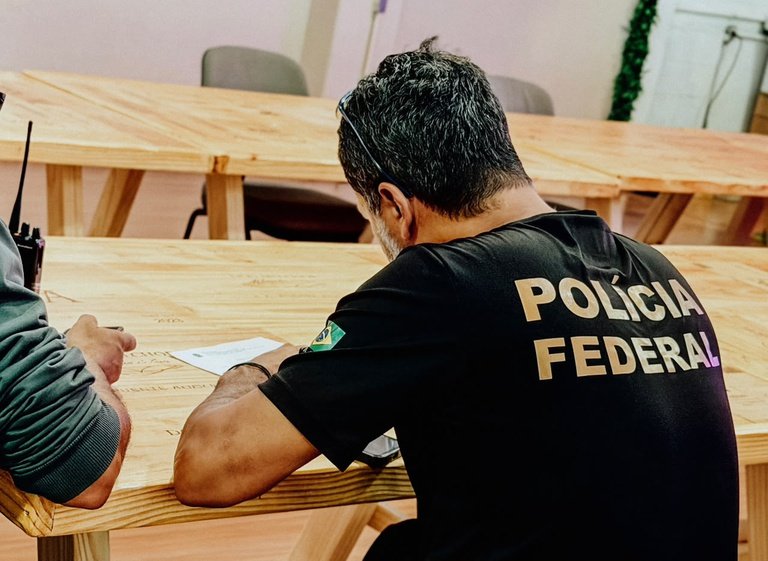
Brazil’s Federal Police launched a nationwide inspection operation targeting private-security services operating without federal authorization, placing the country’s regulatory framework for guards and security providers under coordinated enforcement scrutiny.
Operation Segurança Legal X began on November 12, 2026, with simultaneous action in every Brazilian state and the Federal District. The Federal Police, known as the PF, said it deployed 426 officers through the country’s 27 state and federal-district capitals and 96 decentralized units. It planned to inspect 544 establishments, including nightclubs, commercial premises and condominiums that may use private-security services.
The operation is principally regulatory and administrative. Its purpose is to identify and halt security activity conducted without the authorization required from the Federal Police, rather than to establish criminal liability. The PF has not released a consolidated nationwide result showing how many of the 544 planned inspections led to citations, closures or other measures.
A federal authorization system
Brazil’s framework is set out in Law 14,967/2024 and regulated by Decree 13,012/2026. Under that system, private-security services require prior authorization from the Federal Police. The PF is the institution responsible for granting authorization, supervising the sector, conducting inspections and applying administrative sanctions.
That structure makes the operation broader than an inspection of security companies alone. Businesses and residential condominiums that obtain or use private-security services can also fall within the inspections when authorities assess whether the activity being provided has the required authorization.
For overseas readers, the key distinction is procedural. A finding that a service is operating without authorization can trigger an administrative case and an order to stop the activity. It does not by itself amount to a criminal conviction, nor does it establish final wrongdoing by the affected business or provider.
Enforcement confirmed in several states
Regional Federal Police releases show that the nationwide operation produced concrete enforcement actions, though they do not provide a national total.
In the Federal District, the PF reported that 11 establishments were cited for irregular provision of private-security services and that administrative proceedings were opened. In Ceará, Pernambuco and Rio Grande do Norte, the Federal Police reported that unauthorized security activities were stopped.
These measures are administrative findings at an initial enforcement stage. The available material does not identify specific companies in the national launch notice and does not establish any convictions or final criminal judgments. Businesses cited in administrative procedures retain the right to challenge the findings through the applicable defense process.
An annual operation with a wider 2026 regulatory backdrop
Segurança Legal has been conducted annually since 2017, according to the Federal Police. The tenth edition comes after the 2024 law and its 2026 implementing decree defined the current authorization, oversight and sanctions framework cited by the PF.
The operational scale announced for this edition illustrates how the federal model works in practice: central rules are enforced through a dispersed policing structure, combining the 27 capitals with 96 decentralized units. The planned target list of 544 establishments also indicates that inspections were directed at the places where private-security services may be supplied or used, rather than only at firms’ registered offices.
The operation therefore affects several groups: providers that need federal authorization to offer private-security services; commercial venues and nightclubs that employ such services; and condominiums that may contract or rely on private guards. For each, the immediate regulatory question is whether the service complies with the authorization requirement overseen by the PF.
What happens next
For establishments cited during the operation, the next stage is administrative. The Federal Police has published guidance for companies classified as unauthorized on how to submit a defense. That means the reported citations and closures remain subject to the procedures available to affected parties.
At a national level, an important outstanding measure is the final scope of enforcement. The PF announced 544 planned inspections but the available releases do not provide a consolidated count of inspections completed, establishments cited, activities shut down or proceedings opened across Brazil. Regional results confirm enforcement occurred, but they cannot be treated as a nationwide tally.
For now, Operation Segurança Legal X is best understood as a coordinated federal compliance action under Brazil’s private-security rules: it has produced documented administrative interventions in several states, while the final national outcome and the resolution of individual defense proceedings have not been established in the available material.