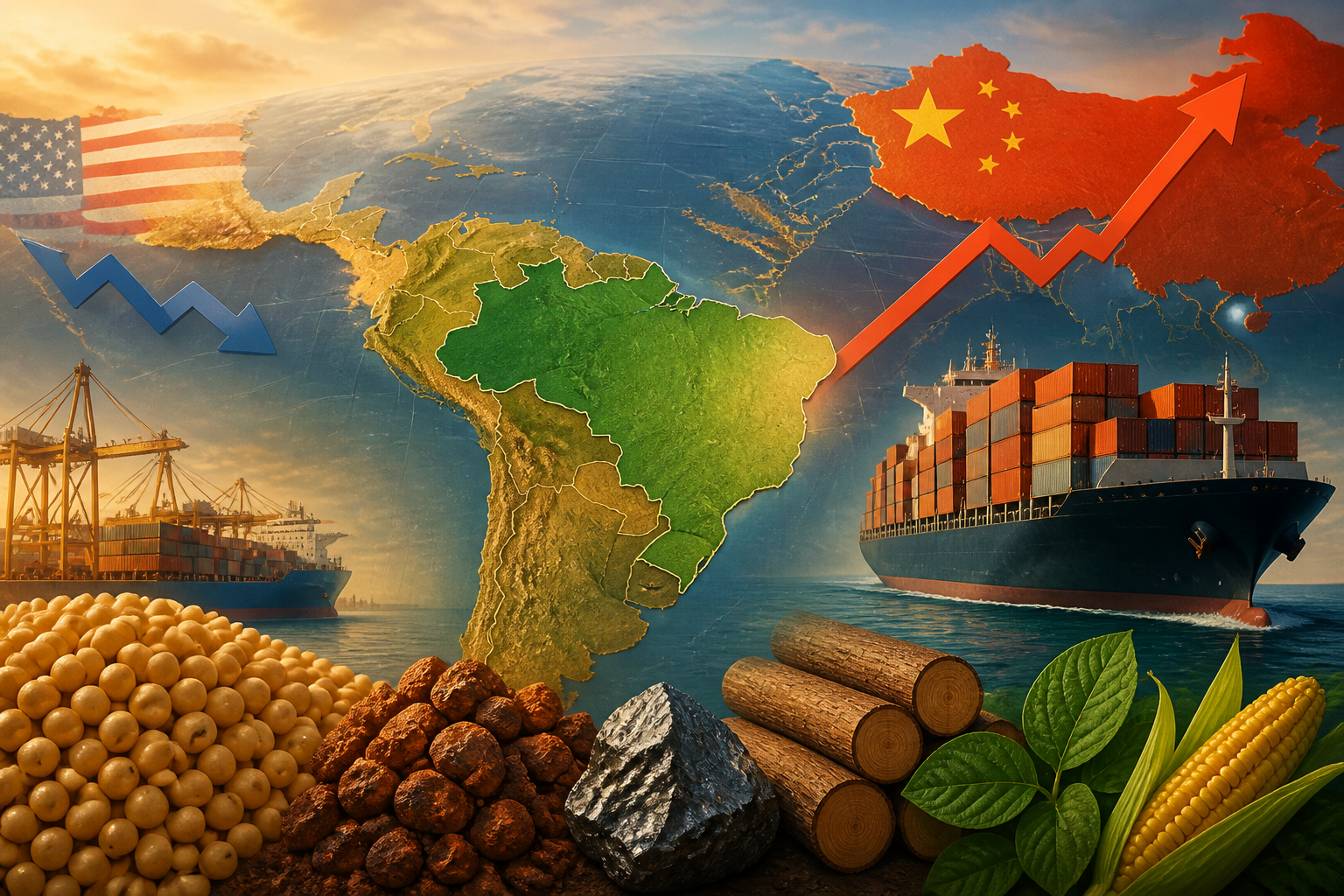
Brazil’s export expansion in 2026 has been driven increasingly by commodity sales to China, while exports to the United States have declined, according to official Brazilian trade data and a separate McKinsey analysis.
Brazil exported US$250.86 billion in goods from January through August, a 10.3% increase from the same period in 2025, the Ministry of Development, Industry, Trade and Services (MDIC) reported. Shipments to China rose 15.0% to US$77.07 billion. Exports to the United States, by contrast, fell 9.7% to US$24.10 billion.
Those figures mean China accounted for about 30.7% of Brazil’s exports over the eight-month period. They also point to a widening divergence between Brazil’s two largest external markets: China absorbed rising sales as US-bound exports weakened.
What happened
The strongest contributors to Brazil’s overall export growth were among its major commodity shipments. MDIC reported that soybean exports rose 15.2% year on year in January through August, exports of crude petroleum oils increased 23.8%, and exports of fresh, chilled and frozen beef grew 22.3%.
McKinsey’s September 2026 update, which examines January-to-June data, similarly identified crude oil, beef and soybeans as the main products behind growth in exports to China. It estimated that Brazilian exports increased 11% in the first half of 2026, compared with 3% growth in 2025, and said China accounted for more than half of that increase.
According to the analysis, China gained 2.6 percentage points of Brazil’s export share during the first half. McKinsey’s figures annualize the six-month 2026 data, whereas the later MDIC release provides consolidated results for the first eight months of the year.
Why it matters
The data underline how the composition and destination of Brazilian export growth can shape the country’s exposure to shifts in global commodity demand and trade policy. The official releases establish the faster growth of China-bound exports and the decline in US-bound shipments; they do not, by themselves, establish that Brazil has become dependent on China or that it has stopped diversifying its trade relationships.
Still, the scale of the divergence is notable. China bought US$77.07 billion in Brazilian goods in the first eight months of the year, more than three times the US$24.10 billion sold to the United States. Since the strongest national product gains came from soybeans, crude oil and beef, the export upturn has also been concentrated in major resource and agricultural categories.
For overseas readers, this matters because Brazil is a significant supplier of food, energy and raw materials to global markets. Changes in demand from China, or disruptions affecting key commodity flows, can therefore have implications for Brazilian trade revenues and for international supply chains.
The bigger picture
McKinsey said total goods trade between Brazil and the United States fell by about US$2.5 billion, or 13%, in January through June 2026. It cited tariff pressure and lower exports of oil, iron and steel, and coffee.
That measure covers total bilateral goods trade and is not identical to MDIC’s later measure of Brazilian exports to the United States. But both point in the same direction: weaker trade performance involving the US market during 2026, alongside stronger Chinese demand for Brazilian exports.
The comparison also illustrates why the choice of time period matters. McKinsey’s assessment is based on the first half of the year, while MDIC’s most recent consolidated release covers January through August. The official eight-month data provide the broader confirmed picture available in the material: overall exports were rising, sales to China were rising faster, and shipments to the United States were falling.
By the numbers
- US$250.86 billion: Brazil’s total exports in January–August 2026.
- 10.3%: Year-on-year growth in total exports over that period.
- US$77.07 billion: Exports to China, up 15.0% from a year earlier.
- US$24.10 billion: Exports to the United States, down 9.7%.
- About 30.7%: China’s share of Brazilian exports in the first eight months, calculated from MDIC’s totals.
- 23.8%: Growth in crude petroleum oil exports, the largest of the three cited commodity increases.
What happens next
The available figures do not establish whether the gap between Chinese and US demand will persist through the rest of 2026. But subsequent trade releases will show whether Brazil’s export growth continues to be led by China-bound commodity shipments, and whether exports to the United States recover from their January-to-August decline.