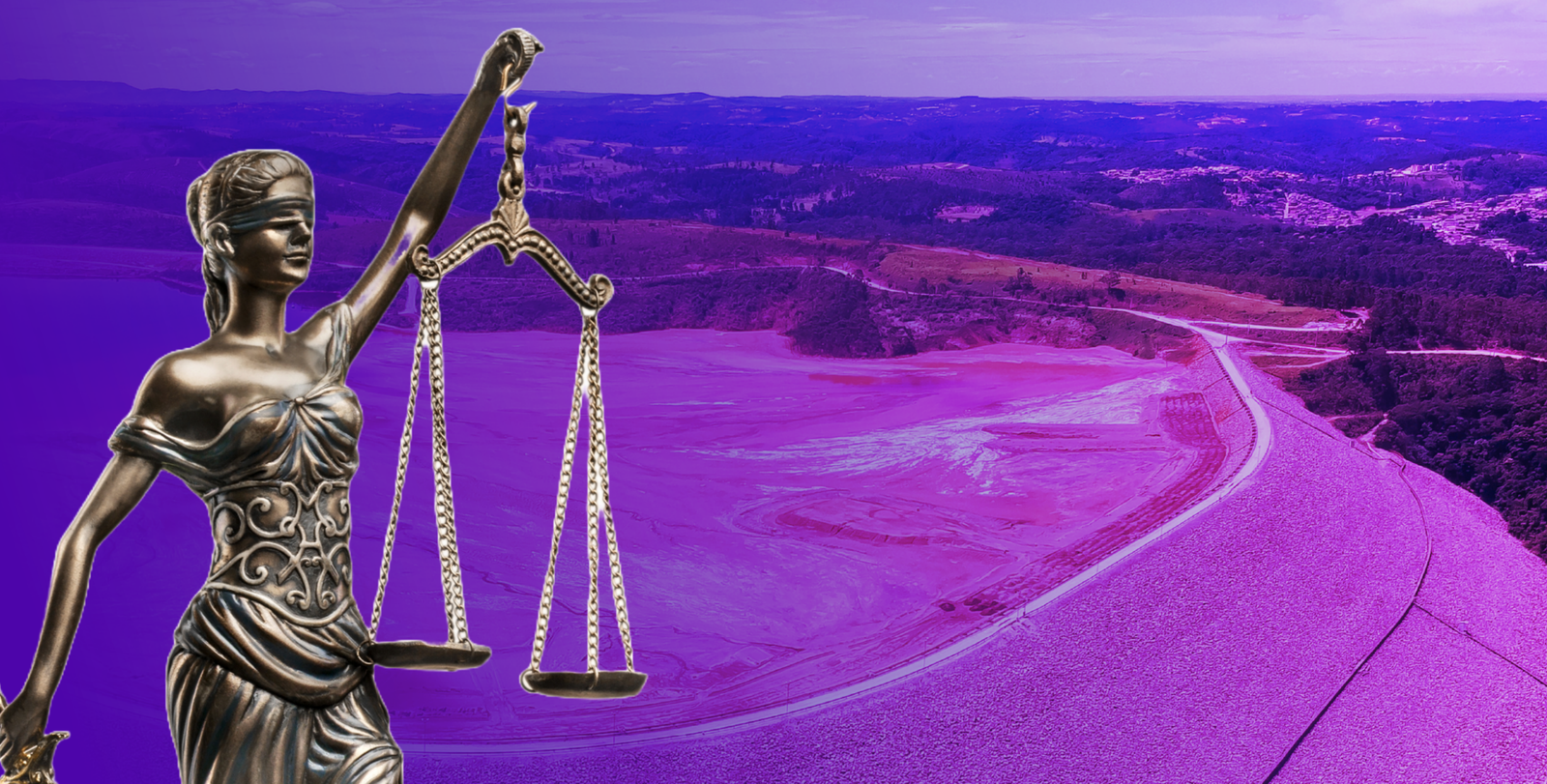
BRUMADINHO, Brazil — On January 25, 2019, Vale’s B1 tailings dam at the Córrego do Feijão mine collapsed in Brumadinho, in the southeastern state of Minas Gerais. The catastrophe killed 270 people under the count used in the criminal case and caused extensive environmental and social damage.
Some Minas Gerais state and federal-court materials give a death toll of 272 because they include two unborn children. The figures therefore describe different counting conventions, rather than competing accounts of the disaster’s human impact.
Those killed included Vale employees, contractors, residents and visitors. Seven years on, the collapse remains one of the defining tests of whether Brazil’s mining industry, regulators and courts can establish accountability after a large-scale industrial disaster.
What happened
The B1 structure was an upstream tailings dam, a design in which successive raises are built using previously deposited mining waste. Official findings by Brazil’s National Mining Agency, known as ANM, said Vale had failed to promptly report safety anomalies. These included abnormal drainage, emergency-level piezometer readings and unusual radar readings.
The company’s reporting to authorities also contained information that was inconsistent with its internal records, according to the ANM’s technical report.
Those findings are central to the public record of the collapse, but they do not by themselves decide individual criminal responsibility. That question remains before the federal courts.
Why it matters
Federal criminal proceedings involving Vale, German certification company TÜV SÜD and former personnel are now at the evidentiary-hearing stage. The accusations include alleged environmental offenses and 270 homicides. Hearings began on February 23, 2026 and are scheduled to continue through May 17, 2027.
No defendant has been convicted. The hearings are intended to examine evidence before the court reaches any judgment on the allegations and on potential responsibility.
Vale has disputed what it characterizes as premature attribution of individual responsibility before technical conclusions, and says it has submitted its defenses. TÜV SÜD says it bears no legal responsibility for the collapse and maintains that its stability declaration complied with the Brazilian rules applicable at the time.
The case matters beyond Brumadinho because it examines the roles of a mine operator, an external certifier and public oversight in a country whose economy is closely connected to large-scale mineral production.
The bigger picture
The disaster prompted scrutiny not only of company practices but also of the system meant to supervise tailings dams. A congressional inquiry documented deficiencies in regulatory and labor-safety inspection capacity. Proceedings at Brazil’s federal audit court, the TCU, also examined the ANM’s actions in the case.
Together with the ANM’s findings on reporting and safety information, these records support an assessment of systemic failures in dam-safety governance and oversight. That is an analytical characterization of documented failures, not a final judicial finding against any particular defendant.
Brazil subsequently tightened its legal framework. Law 14.066 of 2020 prohibited the construction or raising of upstream mining dams and required existing upstream structures to be decommissioned. The law permits technically justified extensions in specified circumstances.
The policy response is significant because B1’s design was upstream. The ban and decommissioning requirement made the Brumadinho collapse a turning point for a category of structure that had been used in Brazilian mining.
By the numbers
- January 25, 2019: Date of the B1 dam collapse.
- 270: Homicide victims cited in the criminal proceedings.
- 272: Deaths cited in some official commemorative materials when two unborn children are included.
- About R$37.68 billion: Value of the comprehensive collective-damages reparation agreement approved in 2021.
- February 23, 2026 to May 17, 2027: Scheduled period for evidentiary hearings in the federal criminal proceedings.
The 2021 agreement provides for wide-ranging reparations, including environmental restoration. Its estimated value does not cap environmental restoration obligations.
What happens next
The immediate next phase is the continued presentation and examination of evidence in the federal proceedings. A conviction has not been established, and the scheduled hearings do not predetermine the outcome for Vale, TÜV SÜD or the individual defendants.
For affected communities, workers’ families and Brazilian institutions, the case continues to carry two linked questions: whether legal responsibility can be determined through due process, and whether the post-Brumadinho safety framework can prevent another catastrophe of this scale.