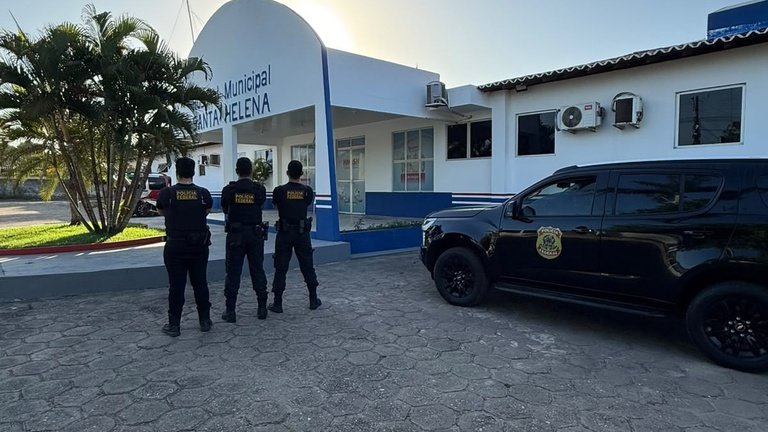
Brazil’s Federal Police and the country’s social-security intelligence unit launched Operation Laudo Cego on September 22, 2026, executing 39 search-and-seizure warrants in an investigation into the alleged fraudulent acquisition and maintenance of temporary-disability benefits.
The court-authorized searches covered 14 municipalities in six states. Nine were in Maranhão, where the investigation is based, while the remaining warrants were carried out in Santa Rosa in Rio Grande do Sul, Cotia in São Paulo, Parauapebas in Pará, Parnaíba in Piauí and Ubajara in Ceará.
Authorities identified 172 benefits as potentially fraudulent and estimated the resulting loss to public funds at approximately R$6.5 million to R$6.57 million. Those figures are investigative estimates rather than amounts established by a final court judgment.
What investigators allege
The Federal Police said the suspected structure may have included public servants, health professionals, accountants, businesspeople and intermediaries organized into groups with different functions.
The practices under investigation include allegedly false medical reports, fictitious employment relationships, fraudulent information entered into social-security systems, recruitment of benefit recipients and movement of the resulting payments. Investigators are examining whether those methods were used both to obtain new benefits and to keep existing payments active improperly.
In addition to the searches, courts authorized access to banking and tax information, prohibited contact among investigated parties and imposed restraints on assets and funds. Authorities said the asset measures were intended to preserve resources for possible reimbursement of the public treasury if losses and legal responsibility are ultimately established.
The Federal Police listed potential offenses that may be considered according to each person’s alleged conduct, including social-security fraud, falsification of public documents, insertion of false data into information systems, criminal organization and money laundering. The verified official releases did not report arrests, charges or convictions.
How the benefit works
Temporary-disability benefit, formerly known in Brazil as auxílio-doença, replaces income for an insured worker who is temporarily unable to perform a job or usual activity because of illness or injury for more than 15 consecutive days.
Applicants generally must retain insured status within the social-security system, demonstrate temporary incapacity and satisfy a minimum contribution period of 12 months. Exceptions to the contribution requirement apply in specified circumstances, including accidents and certain serious medical conditions.
Claims can be assessed through an in-person federal medical examination or, in eligible cases, through Atestmed, the INSS document-review channel. For documentary applications, claimants submit medical certificates and supporting records through the Meu INSS digital service. The documents must identify the patient and medical professional and state the condition and expected period away from work.
This process explains why the alleged use of false medical evidence or invented employment records is significant. Medical documentation supports the incapacity finding, while employment and contribution records help establish whether an applicant is insured and meets the conditions for payment.
By the numbers
- 39 search-and-seizure warrants were executed.
- Six states were covered: Maranhão, Rio Grande do Sul, São Paulo, Pará, Piauí and Ceará.
- 14 municipalities were listed in the official releases, including nine in Maranhão.
- 172 benefits were classified by investigators as potentially fraudulent.
- R$6.5 million to R$6.57 million is the estimated suspected loss to public funds.
- About R$1 million is the government’s projection of additional losses that could be avoided by suspending payments determined to be improper.
The estimated R$6.57 million loss works out to roughly R$38,200 per benefit under review. That is only an aggregate comparison: authorities did not publish the amount, payment period or evidence associated with each individual benefit.
The projected R$1 million in avoided future payments is not money already recovered. It represents an estimate of spending that may be prevented if administrative reviews confirm that payments should stop.
Why the case reaches beyond individual claims
The operation is focused on a relatively small group of benefits, but the alleged mechanism spans several points in the claims system: medical certification, employment histories, government databases, recruitment of recipients and movement of funds. That is why the investigation includes both police work and the Ministry of Social Security’s intelligence capacity.
The case is being handled through the Social-Security Task Force, a joint structure involving the Federal Police and the Ministry of Social Security. The ministry said the partnership has operated for 26 years, with its General Coordination for Social-Security Intelligence responsible for detecting and analyzing indications of organized fraud.
For legitimate claimants, the investigation does not change the underlying purpose of temporary-disability coverage or establish that document-based claims are inherently suspect. Eligibility remains an individual administrative determination based on insured status, contribution rules and evidence of incapacity.
Connection to an earlier operation
Operation Laudo Cego grew out of Operation Camisaria, launched in September 2024. According to the Ministry of Social Security, analysis of material seized in that earlier inquiry, combined with additional investigative work, produced indications of a structured scheme involving the improper granting of social-security benefits.
The latest operation therefore represents a new investigative phase rather than a final judgment arising from the earlier case. The authorities have not publicly detailed which evidence from Operation Camisaria led to each of the 172 benefits now under review.
What to watch next
The documented next step is the examination of seized materials and data obtained through the judicial measures. That analysis may determine whether investigators recommend charges, whether prosecutors pursue a criminal case and whether benefit or asset decisions are contested through administrative or judicial channels.
Any suspension, recovery demand or criminal accusation will require its own legal basis and process. Searches, access to financial records, contact restrictions and asset restraints are investigative or precautionary measures; they do not prove that an investigated person committed an offense.