What happened: Between 2001 and 2013, Brazil recorded a substantial fall in poverty according to World Bank analysis based on PNAD household-survey data and administrative thresholds used in the country’s social-policy system.
Under that measure, extreme poverty declined from 9.9% of the population in 2001 to 4.0% in 2013. Moderate poverty fell from 24.7% to 8.9% over the same period.
These figures require an important qualification for international readers: they are not based on an internationally comparable poverty series, nor on a single statutory Brazilian poverty line. The World Bank analysis used thresholds associated with Bolsa Família and the Brasil Sem Miséria strategy: R$70 per person per month for extreme poverty and R$140 for poverty.
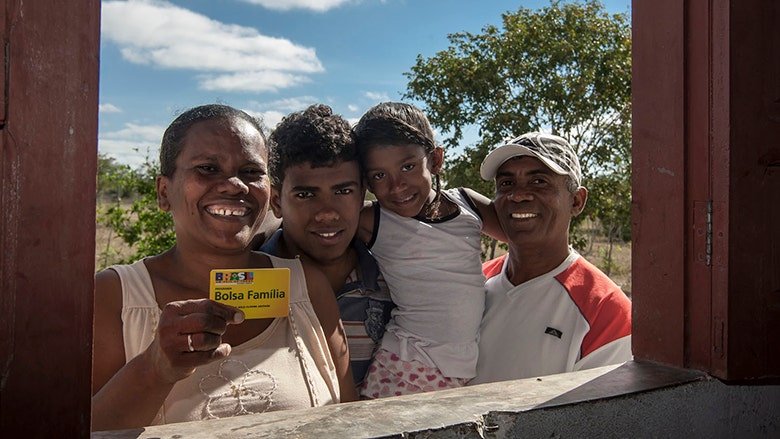
Bolsa Família became a defining institution of this period. Created in 2003, it merged earlier federal social-transfer programmes into a conditional cash-transfer programme. Its design and Brazil’s broader social-policy infrastructure were subsequently shared internationally as examples of how registries and targeted transfers can be used to reach lower-income households.
Why it matters
The 2001-2013 period remains central to debates over Brazil’s social policy because it documented that poverty can fall rapidly when income support is combined with favorable economic and labor-market conditions.
But the historical record does not support treating Bolsa Família as the sole cause of the full decline. The programme did not begin until 2003, meaning it cannot alone explain changes measured from 2001. The World Bank attributes the progress to a combination of targeted transfers and social-policy reforms, stronger growth, job creation, labor-market gains and a more equitable distribution of income.
In the Bank’s decomposition of the decline in moderate poverty, roughly two-thirds was associated with economic growth and about one-third with improved income distribution. That assessment places cash transfers within a wider inclusive-growth cycle rather than presenting them as an isolated intervention.
By the numbers
- 9.9%: estimated extreme-poverty rate in 2001 under the administrative threshold used in the World Bank analysis.
- 4.0%: estimated extreme-poverty rate in 2013 under the same measure.
- 24.7% to 8.9%: decline in moderate poverty between 2001 and 2013.
- R$70 per person per month: the administrative extreme-poverty threshold cited in the analysis.
- R$140 per person per month: the corresponding poverty threshold.
- 58%: estimated decline in extreme poverty associated with social transfers collectively, including Bolsa Família and the BPC social pension, between 2004 and 2014, according to a later World Bank results brief.
The 58% estimate should also be read carefully. It concerns Bolsa Família and BPC together, rather than providing an estimate of Bolsa Família’s effect on its own.
The bigger picture
Brazil’s experience helped make its social-protection systems a subject of international policy learning. World Bank material describes the dissemination of Brazilian experience with conditional transfers and the Single Registry, a database used to identify and connect lower-income families with public programmes.
The historical lesson is broader than one programme. Targeted cash transfers can supplement household income and support access to services, but their poverty-reduction effects operate alongside the availability of work, wage and income trends, and the capacity of public institutions to identify eligible families.
The period also illustrates the vulnerability of gains made during favorable economic conditions. Subsequent World Bank reporting documented that poverty reduction was reversed during Brazil’s mid-2010s economic crisis, when the labor market deteriorated. That reversal does not alter the measured 2001-2013 decline, but it qualifies any assumption that progress would continue automatically.
What happens next
The historical data do not establish a guaranteed formula for future poverty reduction. They do, however, provide a benchmark for evaluating policy: poverty outcomes should be assessed with clear definitions, and the respective roles of transfers, employment, economic growth and income distribution should not be conflated.
For Brazil and other countries studying its experience, the lasting significance of the 2001-2013 cycle lies in both its scale and its limits. It showed that social protection can form part of a significant reduction in poverty, while later economic disruption showed that those gains can remain exposed to wider shocks.