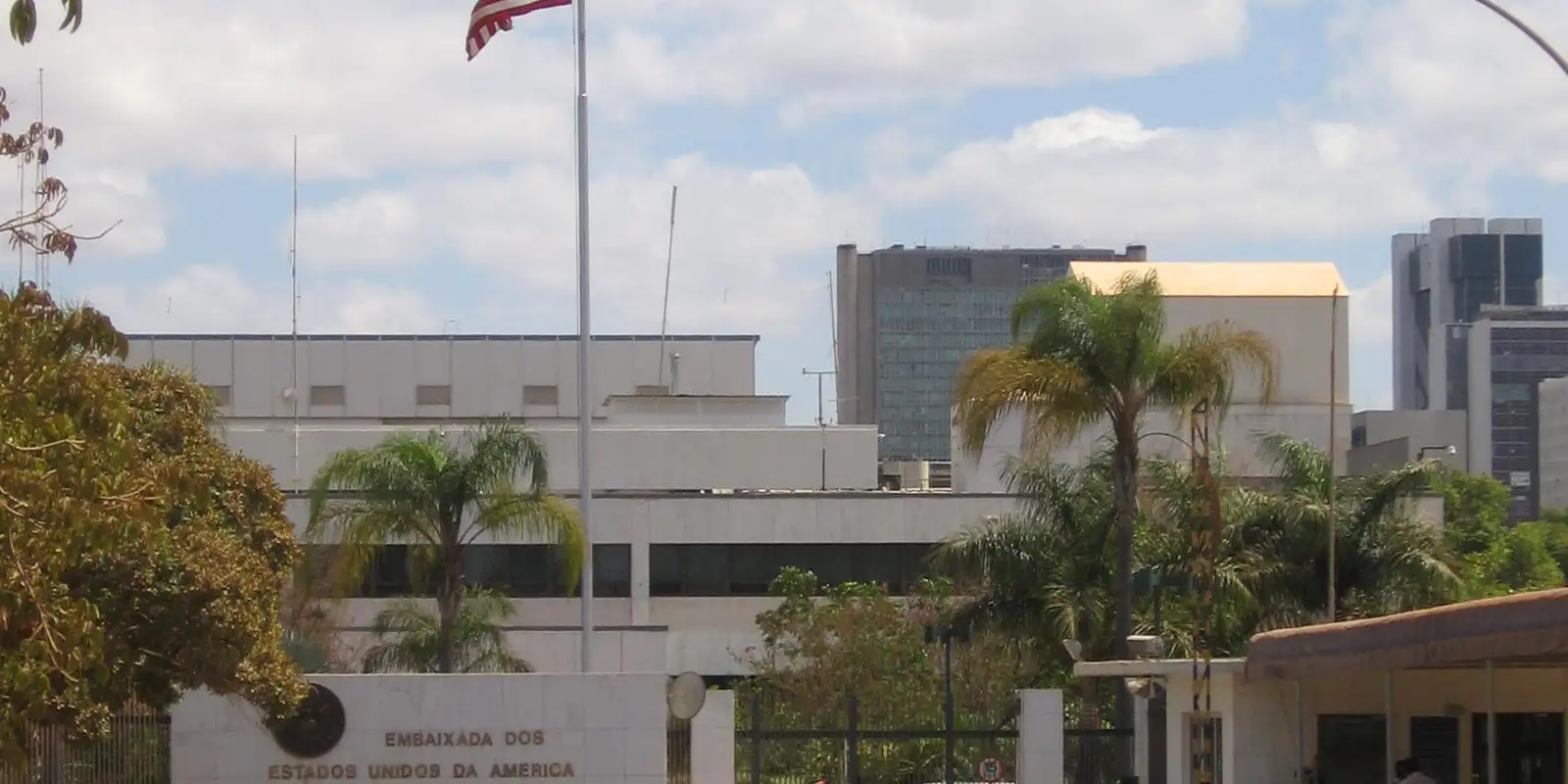
Brazil’s Federal Police carried out two search-and-seizure warrants on October 2 in a confidential investigation into alleged planning that could put U.S. diplomatic facilities in Brazil at risk.
The searches took place in São Paulo and the area surrounding the Federal District, according to the Federal Police, known as the PF. The force described the action as preventive and said the inquiry stemmed from cooperation with foreign intelligence agencies.
The operation came two days before Brazil’s October 4 election. But authorities did not publicly say that the alleged planning was related to the vote, and the information released does not establish an election-related motive or operational connection.
What happened
The PF said it executed two court-authorized search-and-seizure warrants as part of an ongoing investigation. The inquiry remains confidential, and authorities have not publicly detailed the intelligence that prompted it, the possible actors involved or the particular diplomatic facilities that may have been at risk.
Investigators seized communications equipment and media and were continuing to examine those materials, the PF said.
In an important qualification, the Federal Police said that, as of its statement, it had found no evidence corroborating the risks initially reported. It also said it had not identified suspects linked to criminal organizations.
The case is therefore at the investigation stage. The public information does not establish that an attack was planned or imminent, nor does it identify any person accused or charged in connection with the alleged threat.
Why it matters
The operation concerns the security of U.S. diplomatic facilities in Brazil and reflects cooperation between Brazilian authorities and foreign intelligence agencies. Preventive searches can allow investigators to assess reported risks before authorities determine whether the underlying information is supported by evidence.
At the same time, the PF’s statement places clear limits on what is known. The force said the reported risks had not been corroborated when it disclosed the operation. That means the warrants should not be read as proof that the alleged plans existed or that any group was responsible.
The timing has also drawn attention because the searches occurred shortly before the October 4 election. However, no public link between the investigation and the election has been provided by authorities.
The bigger picture
Brazilian investigators said the case began through cooperation with foreign intelligence agencies, but did not identify those agencies or explain the nature of the intelligence shared. The confidentiality of the investigation limits the information available about the alleged threat and the basis for the court-approved searches.
The available account also distinguishes the geographic scope of the operation from the location of any alleged risk. The PF said warrants were served in São Paulo and the area surrounding the Federal District; it did not say that the searches necessarily occurred within the Federal District itself.
For international readers, the episode is a reminder that early-stage security investigations can involve significant preventive measures while the factual basis of an initial report is still being tested. In this case, the Federal Police has publicly said that corroborating evidence had not yet been found.
By the numbers
- Two: search-and-seizure warrants executed by the Federal Police.
- Two: locations cited by the PF — São Paulo and the area surrounding the Federal District.
- October 2: date of the operation.
- October 4: date of Brazil’s election, two days after the searches.
What happens next
The Federal Police said it was continuing to analyze the communications equipment and media seized during the operation. Authorities have not publicly provided a timetable for that work or said whether additional measures are expected.
Any conclusion about the alleged planning, possible participants or potential targets will depend on the continuing investigation and on evidence that may emerge from the examination of the seized materials.