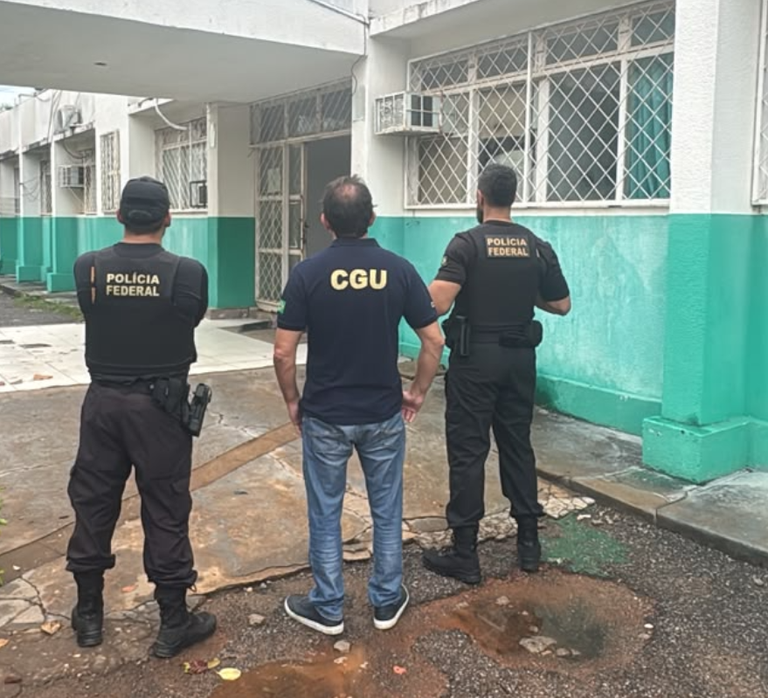
Brazil’s Federal Police, supported by the federal comptroller general’s office, known as the CGU, launched an investigation on November 3 into suspected fraud in procurement and engineering contracts in the municipality of Aragarças, in the central-western state of Goiás.
The operation, named Corrente Reversa, focused on works financed substantially with federal transfers, placing the case within Brazil’s wider system of oversight over how money sent from Brasília is used by local governments. Authorities have not disclosed the value of the contracts under review, the estimated scale of any potential loss, the identities of those investigated, or the court that authorized the warrants.
The inquiry is at the investigation stage. The Federal Police and CGU reported indications of wrongdoing, rather than established findings. No arrests, formal charges or convictions were announced in the official releases consulted.
Searches span Goiás and Mato Grosso
Police executed five court-authorized search-and-seizure warrants in Aragarças as well as Cuiabá, Pontal do Araguaia and Salto do Céu, all in the neighboring state of Mato Grosso. Authorities also carried out authorized personal searches.
According to the Federal Police, the searches covered residences and business premises linked to investigated parties, as well as administrative sectors at Aragarças City Hall. That detail does not establish that municipal officials are targets or that the municipality committed wrongdoing; it indicates that investigators sought records connected with the contracts being examined.
The CGU’s role included tracing the flow of federal resources and analyzing the relevant contracting procedures. This is significant because Brazil’s federal transfers can fund projects administered locally: the municipality runs the procurement and work execution, while federal control bodies may examine whether the money was contracted and spent according to applicable rules.
The suspected procurement mechanism
Investigators said they found indications that companies formally presented as separate bidders may have shared representatives or addresses. The alleged arrangement involved companies alternating their participation in procurement procedures, according to the Federal Police and CGU.
The potential significance of such a pattern is the role competitive bidding is meant to play in public purchasing. Competition is designed to allow public authorities to compare independent offers and select contracts under transparent conditions. If ostensibly separate bidders are coordinated, the process may only simulate competition, potentially directing a contract to a prearranged supplier rather than testing price and terms in a genuine market.
Authorities also cited indications of overpricing and of a shell company without effective operational capacity. Those are investigative hypotheses, not judicial conclusions. The official statements did not identify the companies, quantify possible overpricing or say that any alleged public loss has been confirmed.
The Federal Police said the conduct under examination could correspond to offenses involving frustration of competitive bidding and fraud in procurement or contracts. Whether evidence supports those or any other allegations will depend on the next stages of the investigation and any subsequent legal proceedings.
Federal money and local delivery
The case concerns more than the integrity of individual tenders because a substantial share of the contracts reviewed was funded with federal transfers, according to the Federal Police. In practice, suspected irregularities in a locally administered project can expose federal funds to potential loss and can trigger scrutiny both of contractors and of the public procedures used to hire them.
The reviewed contracts involve engineering works in Aragarças. Municipal representatives specifically referred to contracts 460/2024 and 239/2025, saying they were awarded through competitive procedures. They also said the waterfront works contracted under those arrangements had been completed.
The information currently available does not permit a conclusion about whether the contracts delivered the required work at appropriate prices, whether the alleged links among bidders existed, or whether any public money must be recovered. Those questions are central to the investigation but remain unresolved.
Municipality disputes focus on its administration
Aragarças municipal representatives said the inquiry concerns two contractors, rather than the municipal administration or public officials. They denied municipal involvement, maintained that the cited contracts followed competitive procedures and pledged cooperation with investigators.
There is a difference in how the operation’s scope has been described. The Federal Police and CGU said searches included administrative areas of City Hall. The municipality, in statements reported locally from video remarks by the mayor and municipal attorney, said the investigation was directed at the two contractors rather than the administration. No municipal statement was located on the city government’s official website.
These accounts are not necessarily inconsistent on their own: investigators can seek municipal records in a contractor-focused inquiry. But the available material does not establish who, if anyone, may ultimately be held responsible.
What happens next
The material collected in the searches may lead to additional investigative measures, administrative control proceedings and efforts to recover any public loss that is substantiated, according to the authorities. The Federal Police and CGU did not provide a timetable for those steps.
For now, the practical consequence is an expanded federal review of the contracting trail: bidders, company relationships, prices, contractual documentation and the path of federal resources into municipal works. Any finding of liability, recovery order or criminal case would require further procedural steps beyond the warrants executed on November 3.