On January 25, 2019, Vale’s B1 tailings dam at the Córrego do Feijão mine ruptured in Brumadinho, Minas Gerais. The disaster killed 270 people, plus two unborn children—a distinction that explains why some official records refer to 270 deaths while others list 272 victims.
More than seven years later, the consequences remain before Brazil’s courts. Civil litigation has focused on the scope of compensation, the proof individual claimants must provide and the legal effect of prior settlements. Separate criminal proceedings against Vale, TÜV SÜD and individual defendants are continuing at the trial and evidentiary stage. The defendants have been charged, but no final convictions were recorded in the material reviewed.
What happened in the compensation cases
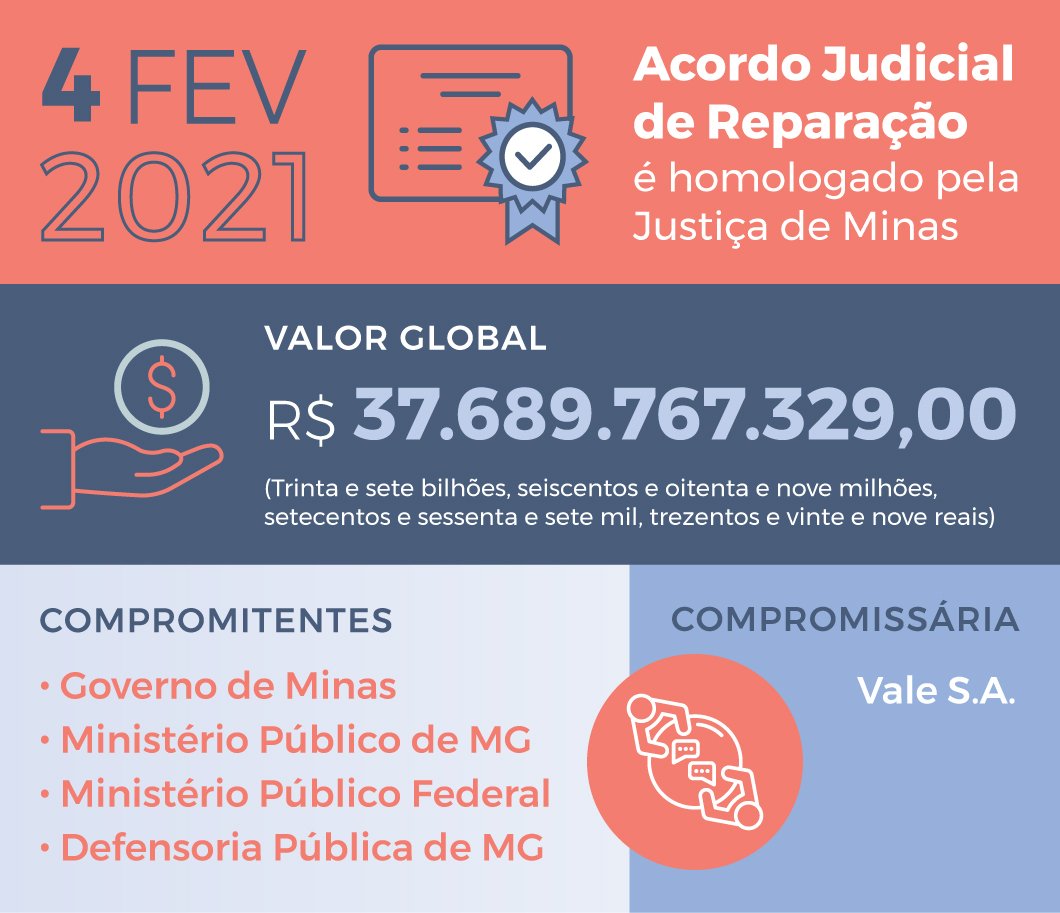
A collective judicial reparation agreement reached on February 4, 2021 was initially valued at approximately R$37.69 billion. It did not extinguish individual civil claims or criminal proceedings.
One important dispute involves a separate commitment between Vale and the Minas Gerais Public Defender’s Office. In a judgment published on December 15, 2023, the Superior Court of Justice, known as the STJ, held that a particular claimant could seek enforcement of a R$100,000 payment specified for qualifying mental and emotional harm.
The ruling did not establish automatic compensation for everyone who says they suffered emotional harm from the collapse. The court required proof that the claimant qualified as a victim of the disaster. That distinction matters because individual eligibility and evidence remain central issues in claims arising from the rupture.
The broader question of whether the Vale–Public Defender commitment can generally be enforced by individual victims is still unresolved. The STJ created Incident of Assumption of Jurisdiction 18, or IAC 18, to decide that issue. The court’s official qualified-precedents database listed the case, REsp 2.113.084, as em julgamento, meaning it remained under judgment, with no final ruling recorded in the consulted entry.
Why it matters
The litigation shows that a large collective agreement does not necessarily settle every consequence of a mass disaster. The 2021 agreement preserved individual civil claims, leaving courts to assess questions including standing, releases in prior settlements, the foreseeability of alleged losses and the evidence required in each case.
In later STJ litigation, the court recognized that unknown or supervening harm may, in some circumstances, fall outside a previous general release. But it rejected a particular claim involving property devaluation, finding that the alleged loss was already foreseeable. The decisions underline that prior releases are being assessed in light of the specific harm claimed rather than treated as an automatic answer in all cases.
Vale’s position in relevant cases has included contesting unrestricted individual enforcement of the commitment and relying on settlement releases. Those arguments remain part of ongoing civil disputes; they do not remove the need for courts to assess individual claims under the applicable evidence and legal standards.
By the numbers
- January 25, 2019: date of the B1 dam rupture in Brumadinho.
- 270 people, plus two unborn children: the most precise formulation of the death toll reflected in the available official materials.
- Approximately R$37.69 billion: the initial value of the February 2021 collective judicial reparation agreement.
- R$100,000: the payment specified in the separate Vale–Public Defender commitment for qualifying mental and emotional harm, subject to proof of victim status in the 2023 STJ case.
- Five years: the limitation period fixed by the STJ in September 2026 for Brumadinho compensation claims under consumer law.
The bigger picture
The September 2026 limitation ruling treated Brumadinho victims as consumers for purposes of compensation claims and set a five-year period. That decision provides a defined procedural framework for claimants, but it does not decide whether any particular person is entitled to damages. Individual cases can still turn on victim status, the nature of the alleged harm, prior releases and evidentiary requirements.
Meanwhile, the criminal cases should be read separately from the civil compensation rulings. The continued prosecution of Vale, TÜV SÜD and individual defendants is not a finding of guilt. The proceedings remained in the evidentiary phase in the consulted record, with the allegations yet to be finally adjudicated.
What happens next
The most consequential pending civil question is the outcome of IAC 18, which could clarify whether individual victims may generally use the Vale–Public Defender commitment as an extrajudicial enforcement instrument. Further decisions in individual cases will continue to define how releases, foreseeable losses and proof of harm apply after the collective agreement.
For the criminal cases, the next known stage is the continuation of evidentiary proceedings. Any eventual determination of criminal responsibility will depend on the outcome of those cases, not on the existence of charges or the parallel civil litigation.