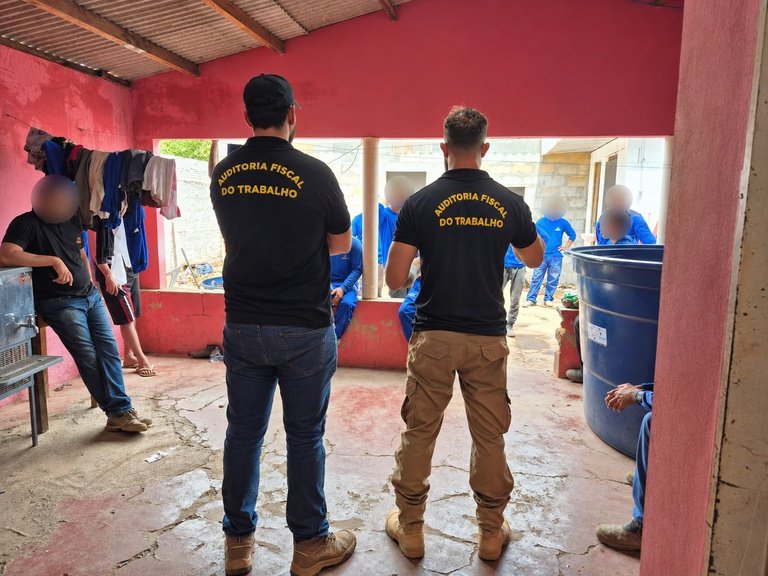
Brazil’s Labour Ministry said federal inspectors rescued 23 construction workers from conditions classified administratively as labour analogous to slavery in Várzea Grande, in the central-western state of Mato Grosso.
The inspection began on November 10, 2026, and the workers were removed from the site the following day. The ministry published its account on November 19. It said the classification resulted from a combination of degrading living and working conditions and exhaustive working hours — two of the modalities included in Brazil’s legal definition of work analogous to slavery.
The case has not produced a criminal conviction or any adjudication of guilt. It is currently a labour-inspection administrative finding. The ministry said infraction notices would be issued and that the case would be referred to the Public Labour Prosecutor’s Office for possible further action.
The ministry did not identify the employer, and no material employer response was available in the verified information.
What inspectors found
The inspection concerned a construction site and involved workers who had been recruited in other Brazilian states. Most were Venezuelan nationals, according to the Labour Ministry.
Company time records covering April through November showed 171 shifts in which workers logged more than two hours of overtime, inspectors found. They also identified 66 intervals between shifts that fell below Brazil’s legal minimum of 11 consecutive hours of rest.
The longest recorded shift lasted 18 hours and five minutes. The shortest recorded interval before a subsequent shift was four hours and 33 minutes. Those records were central to the inspectors’ finding of exhaustive hours: rather than a single long day alone, the documented pattern paired extended shifts with insufficient recovery time.
Inspectors also reported that two employer-provided lodgings lacked potable water. They found restrictions on workers leaving the accommodation or returning to it, as well as serious fall and construction-site hazards. Work at height was immediately interdicted, meaning it was stopped by inspectors because of the identified risks.
How Brazil’s administrative rescue system works
In Brazil, a labour rescue does not itself determine criminal responsibility. It is an enforcement measure taken by federal labour inspectors when they identify conditions meeting the administrative standard for work analogous to slavery.
The legal framework encompasses more than situations of physical confinement. The ministry’s finding in this case relied on degrading conditions and exhaustive working hours. The documented restrictions around the lodging were among the conditions reported by inspectors, but the ministry’s account classified the combined circumstances under the two cited modalities.
The immediate response is designed to separate workers from the conditions under inspection and secure their labour rights. In Várzea Grande, the employer paid R$199,941.63 in termination entitlements. It also financed hotel accommodation, food and travel back to the workers’ cities of origin.
All 23 workers had returned to their cities of origin by the time the ministry disclosed the case. They also became eligible for unemployment insurance available to workers rescued from slavery-like labour conditions.
Venezuelan workers and formal employment records
Most of the group were Venezuelan nationals recruited outside Mato Grosso, placing migrant workers at the center of the case. The verified information does not establish why any individual worker was recruited or how recruitment decisions were made. But their status is relevant to the inspection because workers brought from elsewhere can depend on employer-arranged housing and travel, making access to basic conditions and the ability to leave accommodation especially consequential.
Three workers had not been formally registered. Inspectors entered their employment relationships retroactively in eSocial, Brazil’s digital system for recording employment, payroll and related labour obligations.
That action gives administrative recognition to employment ties that had not been recorded, alongside the termination payments made after the inspection. It does not resolve the pending enforcement process or determine whether any further legal action will be brought.
Why the working-hours records matter
The timekeeping evidence provides a measurable baseline for the ministry’s conclusion. Brazil’s legal minimum rest interval between workdays is 11 hours; inspectors found 66 instances below that threshold in records spanning April to November. The shortest interval was less than half of the required minimum.
Similarly, the 171 shifts with more than two overtime hours show that the inspectors found a recurring pattern in company records, not solely isolated accounts of long shifts. The 18-hour-and-five-minute maximum shift illustrates the upper end of that pattern.
For construction workers, hours and rest rules operate alongside safety requirements. Inspectors’ decision to halt work at height addressed the immediate fall risk identified at the site. The ministry’s report treated the safety concerns, lodging conditions and work schedules as interconnected elements of the overall administrative finding.
What happens next
The Labour Ministry said inspectors would issue infraction notices. These administrative notices can initiate proceedings over alleged violations identified during the inspection.
The ministry also said it would refer the case to the Public Labour Prosecutor’s Office. The verified information does not specify what action that office may take, and referral does not mean that a case has been filed or that liability has been established.
For now, the documented outcomes are the removal of 23 workers from the site, payment of R$199,941.63 in termination entitlements, employer-funded accommodation, food and return travel, retroactive formalization of three employment relationships, and eligibility for rescued-worker unemployment insurance. The administrative enforcement and potential prosecutorial review remain pending.