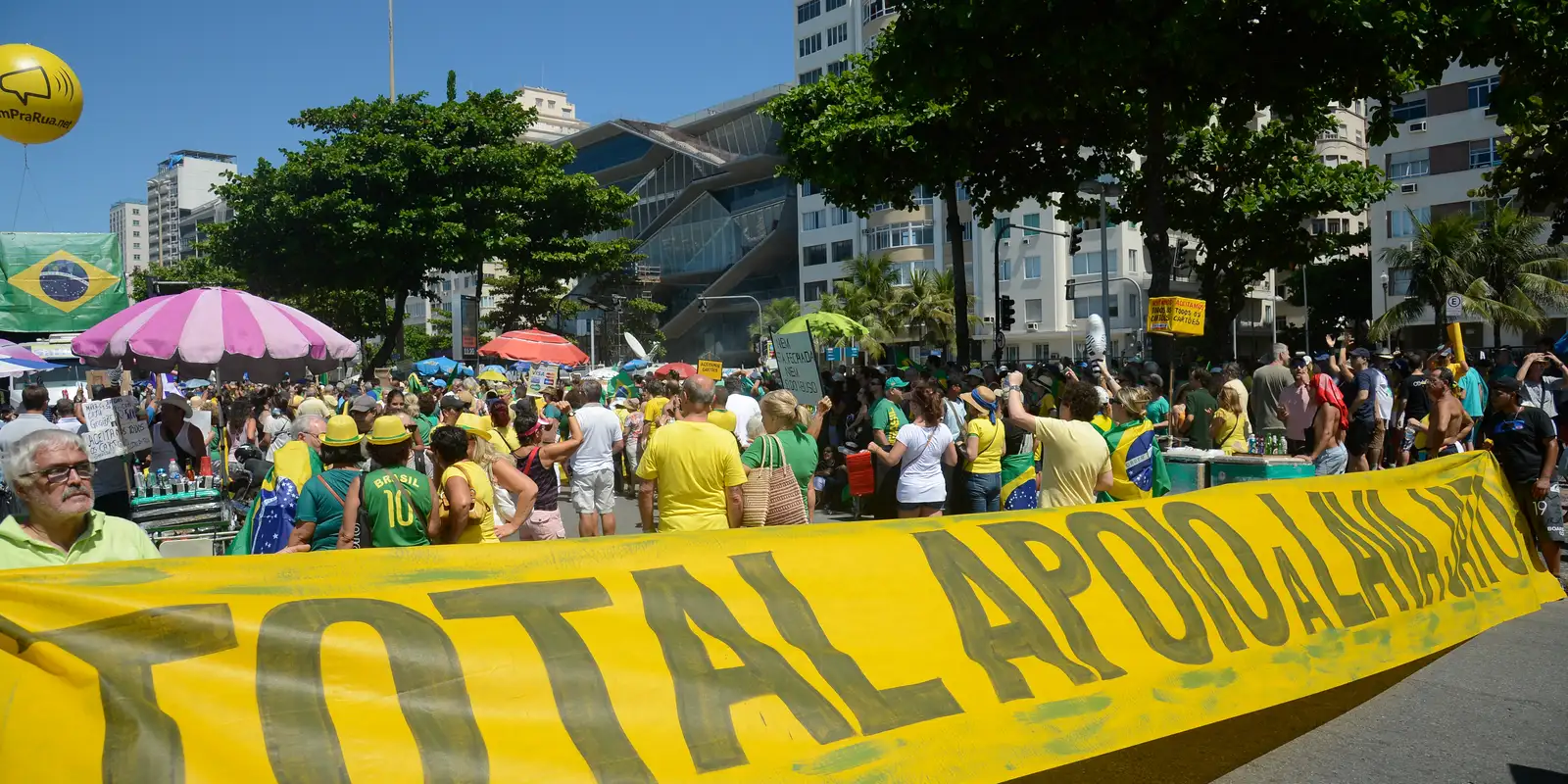
March 17, 2014, remains a defining date in Brazil’s modern legal and political history. That day marked the first overt phase of Operation Lava Jato, an inquiry that began with suspected money laundering involving currency dealers and later expanded into alleged corruption, cartel conduct and illicit payments connected to contracts at state-controlled oil company Petrobras.
Often described by Agência Brasil as Brazil’s largest anti-corruption investigation, Lava Jato went on to involve major construction companies, intermediaries and political figures. Federal revenue authorities reported working alongside the Federal Police and the Federal Prosecutor’s Office in investigations involving money laundering, Petrobras, contractors and politicians.
The operation produced arrests, criminal charges, cooperation and leniency agreements, convictions, and billions of reais in reported recoveries. Its legacy, however, is inseparable from later court decisions that substantially altered the status of some of its most prominent cases.
What happened
According to records from the Federal Prosecutor’s Office, Lava Jato’s opening phase focused on four currency dealers. The broader cases involving Petrobras and alleged corruption developed in later phases.
As the investigation widened, prosecutors pursued cases concerning alleged illicit payments and conduct linked to Petrobras contracts. The operation’s scale and its focus on business and political networks made it a central force in Brazil’s public debate over corruption, criminal justice and the limits of prosecutorial and judicial power.
Its history also includes a series of agreements and court cases whose outcomes were not uniform. The verified record establishes that Lava Jato generated criminal proceedings and convictions, as well as reported financial recoveries, but it does not support treating every case or every defendant as having the same legal outcome.
Why the judicial reversals matter
The most consequential reversals concerned former president Luiz Inácio Lula da Silva. On March 8, 2021, Supreme Federal Court Justice Edson Fachin annulled decisions against Lula in four cases heard by the 13th Federal Court in Curitiba, including convictions. Fachin ruled that the Curitiba court lacked jurisdiction over those cases.
On April 15, 2021, the Supreme Federal Court’s full bench confirmed the jurisdictional ruling by an 8-3 vote. The decision restored Lula’s political eligibility.
Those rulings did not amount to an acquittal on the merits of the allegations. They annulled the Curitiba decisions because the court was found not to have jurisdiction over the cases. Lula had consistently contested the prosecutions, and his lawyers said the rulings vindicated due process. Prosecutors challenged the annulment before the full court confirmed it.
In a separate decision on March 23, 2021, the Supreme Court’s Second Panel found former judge Sergio Moro biased in Lula’s triplex case. The court’s full bench subsequently upheld that finding. This was an impartiality ruling in that case, distinct from the jurisdictional decisions.
The bigger picture
Lava Jato’s trajectory illustrates how a major corruption inquiry can have effects well beyond individual investigations. Its initial money-laundering focus developed into cases spanning Petrobras, construction groups, financial intermediaries and political figures. It also generated scrutiny of the institutions conducting the cases.
The later Supreme Court rulings are therefore central to understanding the operation’s record. They did not invalidate every Lava Jato prosecution, nor did they establish the innocence of every defendant investigated or convicted in its broader proceedings. But they did annul decisions in Lula’s Curitiba cases and establish, in the triplex case, that Moro had acted with bias.
For international readers, the distinction is significant: an arrest, charge, prosecution or conviction is a specific procedural stage and does not by itself settle every later legal question. In Lula’s cases, the Supreme Court’s decisions concerned jurisdiction and judicial impartiality rather than a merits acquittal.
By the numbers
- March 17, 2014: Launch of Lava Jato’s first overt phase.
- Four: Currency dealers were the focus of the opening phase, according to Federal Prosecutor’s Office records.
- March 8, 2021: Justice Fachin annulled Curitiba decisions against Lula for lack of jurisdiction.
- April 15, 2021: The Supreme Court plenary confirmed the annulments by an 8-3 vote.
- March 23, 2021: The Supreme Court’s Second Panel found Moro biased in the triplex case; the plenary later upheld that determination.
Why this history still matters
A decade after its launch, Lava Jato remains a reference point in Brazil for debates over anti-corruption enforcement, corporate accountability, due process and the judiciary’s role in politically consequential cases. Its record includes extensive investigative activity and reported recoveries, alongside judicial findings that required major decisions in Lula’s cases to be set aside.
That dual legacy is the lasting significance of March 17, 2014: Lava Jato changed the scale of corruption investigations in Brazil, while its subsequent reversals underscored that high-profile enforcement actions remain subject to jurisdictional and impartiality safeguards.