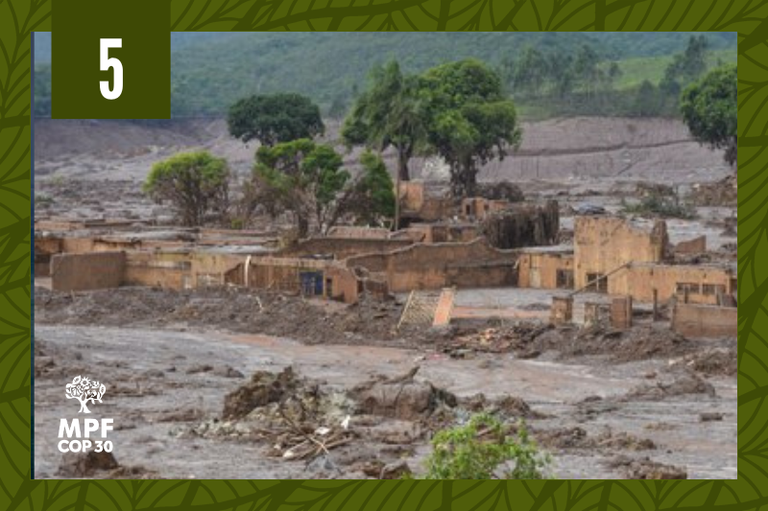
November 5, 2015 remains a defining date for mining accountability in Brazil. On that day, Samarco’s Fundão tailings dam failed near Mariana, in the southeastern state of Minas Gerais. Mining waste travelled through the Rio Doce basin, causing extensive environmental and socioeconomic damage and killing 19 people.
More than a decade later, Brazil has replaced the principal structure initially created to manage remediation. Authorities and the companies signed a R$170 billion repactuation agreement on October 25, 2024. Brazil’s Supreme Federal Court, known as the STF, homologated — or approved — the agreement on November 6, 2024.
The new arrangement redistributes long-term duties for environmental and social remediation and compensation. It also provides for the termination and liquidation of the Renova Foundation, the body created under the previous framework to carry out recovery programs.
What happened
Samarco was equally controlled by Vale and BHP Brasil when the Fundão dam failed. The collapse sent tailings downstream through the Rio Doce basin, creating damage that required a prolonged response across affected areas.
On March 2, 2016, Samarco, Vale, BHP Brasil, federal and state authorities entered into an agreement known as the TTAC. That agreement established the Renova Foundation and an oversight structure involving the Interfederative Committee, or CIF.
The original model remained in place for years amid disputes and negotiations over the scale and terms of repair. The 2024 repactuation superseded that earlier governance structure. Under the new framework, responsibilities that had been handled through Renova are to be transferred among Samarco and public authorities as the foundation is wound down.
The settlement addresses remediation and compensation obligations covered by its terms. It does not erase litigation that is unrelated to, or excluded from, the agreement, including separate claims.
Why it matters
The Fundão failure was not only an environmental disaster; it also imposed lasting social and economic consequences on communities in the Rio Doce basin. The revised agreement recognizes that repair remains unfinished and places that work within a new institutional and financial structure.
For readers outside Brazil, the case illustrates the long time horizon attached to major industrial-disaster remediation. A settlement can set funding and responsibilities, but environmental restoration, compensation administration and social repair can continue well beyond the initial disaster and the creation of an original response mechanism.
The STF’s homologation gives the 2024 agreement judicial approval. It does not itself establish that all remediation has been completed. Instead, the agreement sets out the framework through which the remaining obligations are to be performed over time.
By the numbers
- 19: people killed in the November 5, 2015 dam failure.
- R$170 billion: the value of the repactuation agreement signed in October 2024.
- R$38 billion: reported in the agreement as already spent.
- R$100 billion: payments planned over 20 years under the new arrangement.
- About R$32 billion: allocated to performance obligations.
The bigger picture
The new agreement changes how duties are allocated rather than closing the underlying consequences of the collapse. Its financial structure combines amounts reported as already spent, future payments over two decades and obligations to perform specified remediation-related work.
The termination of Renova is a significant institutional shift. Created in 2016 as the central delivery body under the TTAC, it is being replaced by an arrangement in which Samarco and public authorities take on responsibilities assigned under the 2024 settlement.
BHP Brasil said when the agreement was reached that it acknowledged the tragedy and described the settlement as setting out its obligations with Brazilian public authorities. The verified record also identifies Samarco and Vale as parties to the agreement. The companies’ obligations, however, must be assessed through the implementation of the approved terms rather than through the announcement of the settlement alone.
What happens next
The key next phase is implementation: the transfer of responsibilities from Renova, its termination and liquidation, and the execution of the agreement’s payment and performance commitments. The agreement provides a 20-year period for R$100 billion in payments, while other obligations concern remediation and compensation work to be carried out under the new structure.
The November 2015 disaster therefore remains a long-running corporate-accountability and public-repair matter in Brazil. The 2024 agreement provides a new route for that work, but its significance will depend on how its obligations are delivered for the people, communities and environment affected across the Rio Doce basin.